
The site is where the project actually happens, and it is where most records are lost. The concrete pour, the late delivery, the rain that stopped work, the instruction given during a walk-round: each one matters to cost, time or quality, and each one is easy to forget by the end of the day.
The gap between site and office
- Daily reports are written at night from memory, or not written at all.
- Photos stay on personal phones, without a date, a location or a link to anything.
- Inspection requests are agreed verbally and recorded later, if at all.
- Quality issues are raised in a meeting and forgotten until handover.
The office then makes decisions on cost and claims with only part of the picture.
Site events, recorded where they happen
Quanto works in the browser on phones and tablets, so site teams record events from site. Site events come in 14 types, including meetings, concrete pours, deliveries, inspections, tests, weather, delays, instructions and incidents, each with hours lost and impact. A delay recorded on the day, with its photos, is worth far more than one reconstructed months later.
Photos that mean something
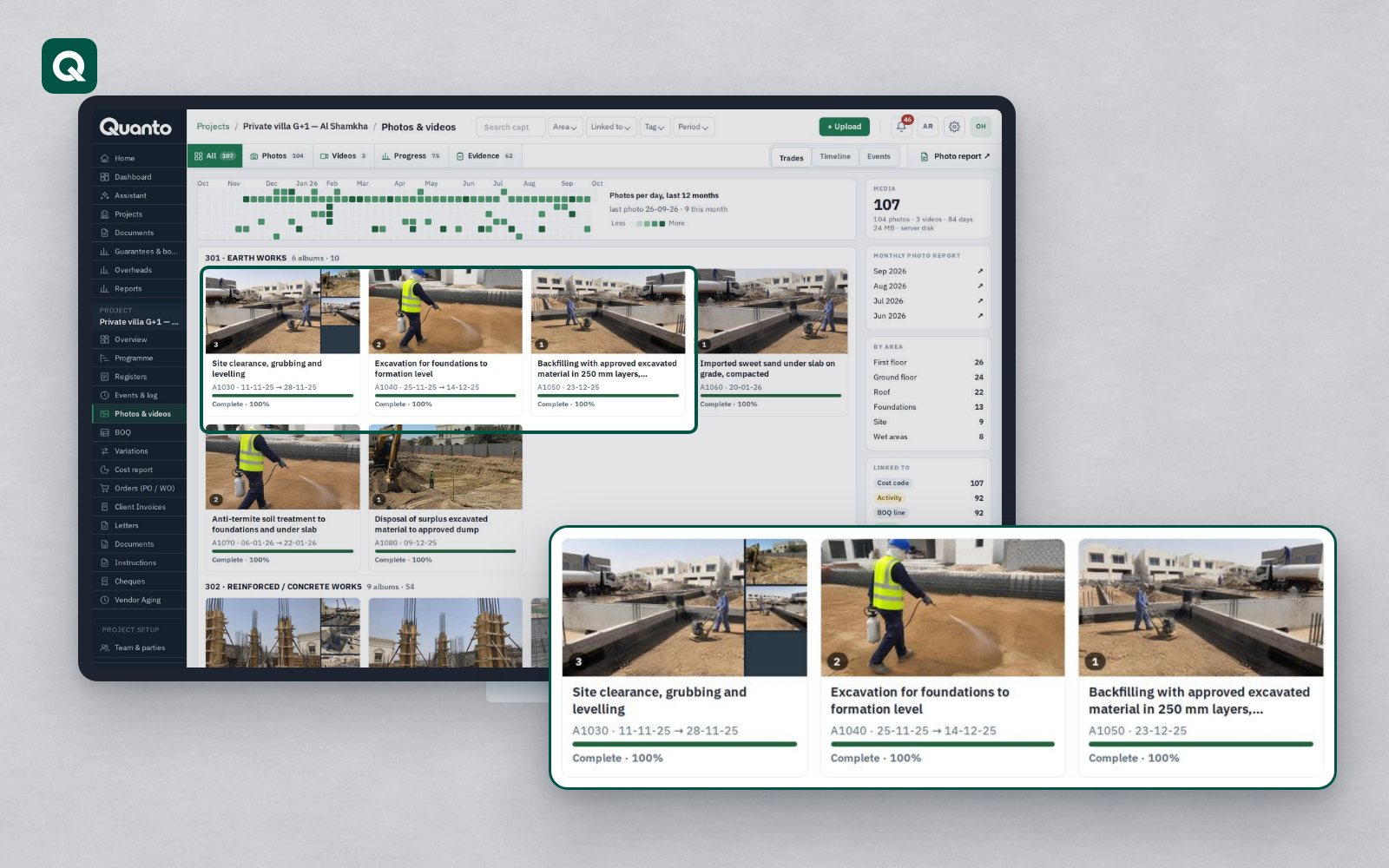
A photo is only evidence if you know what it shows, where and when. In Quanto, photos and videos are tagged by area and linked to the events, programme activities, BOQ lines, variations and letters they belong to. When you open a variation, its photos are there. When you prepare a claim, the photos of the delay are already attached to the events.
Inspections and quality, from request to close-out
- Inspection requests are raised, answered and recorded in the register, with their due dates and results.
- Material submittals, shop drawings and method statements carry revisions, review codes (A to D), ball in court and due dates, so the site knows what is approved before it is built.
- Non-conformance reports run from raising to close-out: response, rectification, re-inspection and verification, with corrective action and root cause.
- RFIs record their cost and time impact, so a technical question that changes the job does not stay technical.
Open NCRs can also hold back amounts in the payment certificate, which links quality directly to money.
Safety records too
Incidents are one of the site event types, and they are kept with their history. Together with controlled revisions, inspections and corrective action, this is how Quanto keeps project records in line with ISO 9001 and ISO 45001. The certification itself is done by your certification body.
The office sees it the same day
Because site records go into the same project as the contract, the cost and the letters, the office does not wait for a weekly summary. The project log shows what happened today. The quantity surveyor sees the instruction that needs pricing; the project manager sees the delay that may need a notice.
Tomorrow: your records, your control, with Arabic and English, security, hosting and ISO-ready records.
Follow Quanto for a new article every day: LinkedIn · X · YouTube · Instagram · Facebook