
Saving time is about how long things take. Saving effort is about how much work there is in the first place. On most projects a large part of the administration is double handling: doing the work, then writing down that the work was done, then copying that record into a register and a report.
The double handling problem
Consider a simple material submittal. The engineer prepares it, writes a transmittal, updates the submittal register, sends an email, follows up, records the review code when it comes back, updates the register again and mentions it in the weekly report. One submittal, seven separate pieces of work, most of them copying.
Records that come out of the work
In Quanto Management, the record is the work. When the submittal is created and sent, the register, the transmittal, the ball in court, the due date and the project log all come from that one action. When the consultant gives a review code (A to D), every view updates at once.
The same idea runs through the system:
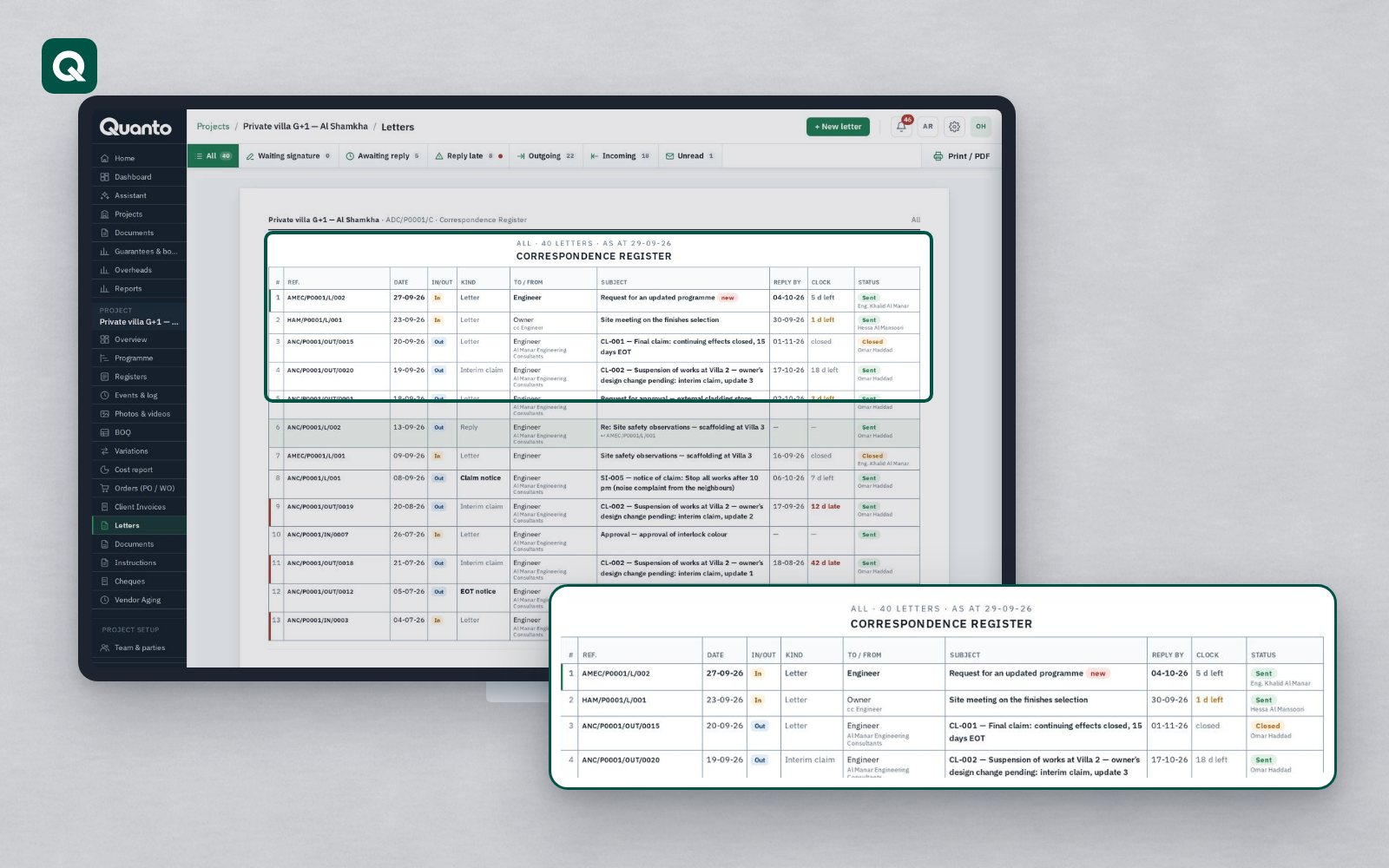
- Letters. Your company letterhead and your own reference numbering pattern are applied automatically. A signatory signs before a letter goes out. Parties on Quanto receive it in their inbox with read receipts, reply-by dates and threads. The correspondence register is simply the list of letters, so it is never out of date.
- Registers. Submittals, shop drawings, method statements, inspection requests, RFIs, transmittals and NCRs each carry their revisions, review codes and due dates. There is no separate spreadsheet to maintain.
- The project log. Every action is recorded automatically with who and when. Nobody writes a diary of what the system already knows.
- Payment papers. Printable application and certificate papers come straight from the valuation, ready to sign.
- Dashboards. The company dashboard shows the cost and time status of every running project and the approvals waiting, without anyone assembling a report.
Less effort for every party
Effort is saved on both sides of the table. The consultant reviews submittals and certifies payments in the same system the contractor used to submit them, so nothing is re-keyed on arrival. The owner sees status on their own home page instead of waiting for a monthly report.
Getting started without re-typing
Effort matters at the start too. Suppliers, cost codes and projects can be imported from Excel, and programmes from Primavera P6 (XER or XML) or MS Project (XML). Onboarding imports your BOQ, programme, suppliers and letterhead and trains your team.
What the team does with the effort saved
When records come out of the work, the team's effort goes where it should: checking quality on site, solving technical issues, planning the next stage and keeping the client informed. The administration still happens; it just stops being a second job.
Tomorrow: working together, with the owner, the consultant, the contractor and subcontractors on one platform.
Follow Quanto for a new article every day: LinkedIn · X · YouTube · Instagram · Facebook