
The project was handed over two and a half years ago. The defects period has ended, the last defects were closed and the final account was agreed. In the contractor's ledger, the second half of the retention is still open. Nobody applied for it. The commercial manager who ran the job has left, the files are in archive boxes, and the owner's team has changed too. When finance finally asks, the first reply is a question: was the certificate that ends the defects period ever issued?
On the same project, the contractor still holds retention from four of its subcontractors. Two of them have written twice. Nobody is sure whether their defects period ended with the main contract or before it.
What it costs
Retention is usually a percentage of each certified amount, held until completion and the end of the defects period. On a large project it can come close to the contractor's whole margin. Unreleased, it is profit the company has earned but cannot use.
The subcontract side cuts both ways. Retention held too long damages relationships and invites claims. Retention released too early leaves the contractor with no security for defects still to come.
A contract of AED 40,000,000 with 5% retention holds AED 2,000,000: half released at completion, half at the end of the defects period. If the second AED 1,000,000 is applied for 18 months late, the company has lent it to the project, interest free, for a year and a half.
How it is usually handled
- Retention is worked out in the payment spreadsheet each month, but the release dates are written nowhere.
- The end of the defects period is in the contract, which nobody opens after handover.
- Subcontract retention sits in the accounts system, separate from the subcontract terms that say when it is due.
- Retention bonds and guarantees are kept in a cabinet, with their expiry dates in someone's diary.
After handover, the project team moves to the next job. Getting the retention back then depends on someone remembering a date one or two years later.
How Quanto Management handles it
In Quanto, retention is part of the project record from the start, not a figure rebuilt in a spreadsheet at the end.
- The contract holds the retention, the defects liability period and the key dates.
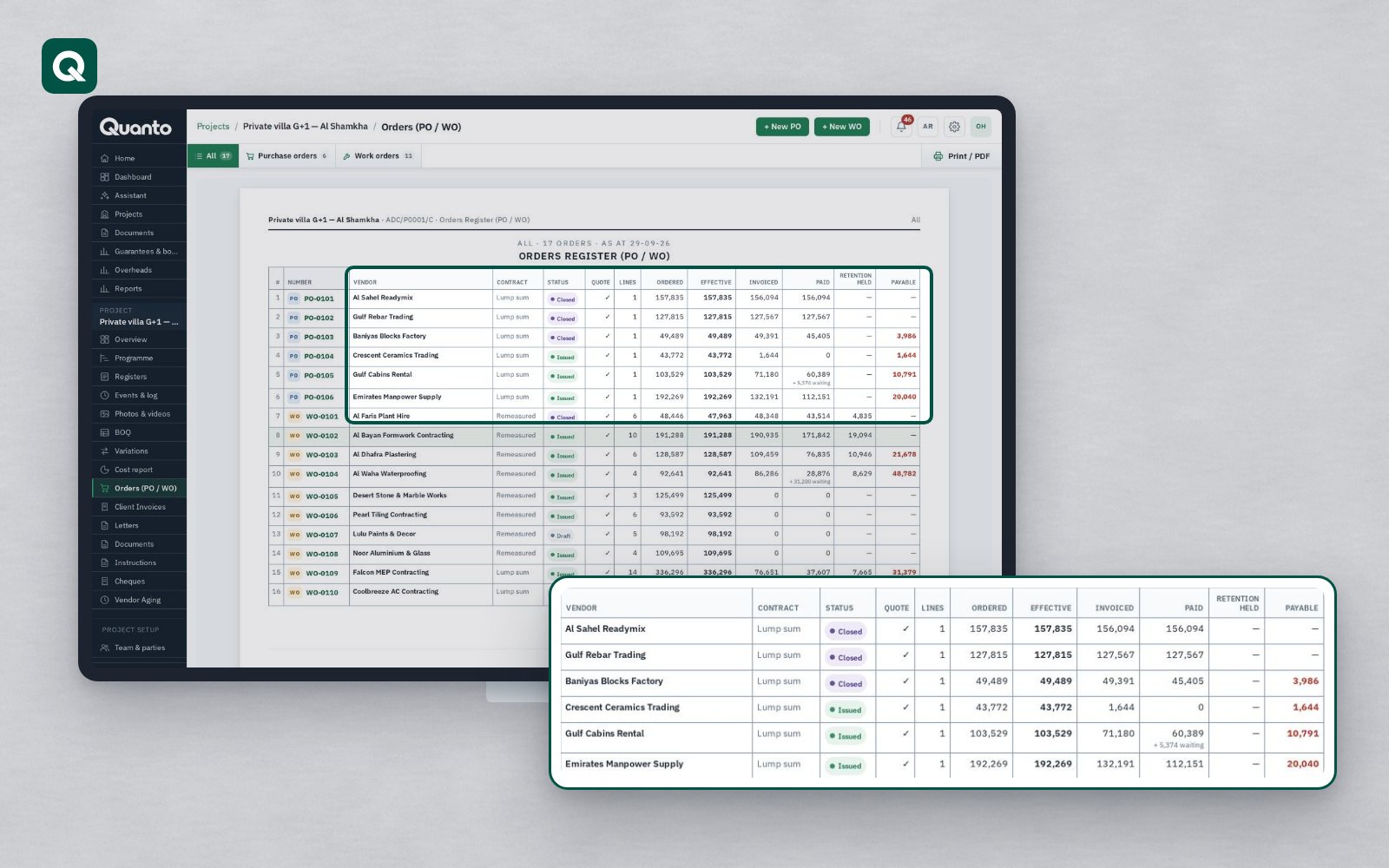
- Each payment certificate (Professional and above) works out retention and its release, so the amount held is known every month. The Engineer certifies it in the same system, and the owner approves it where the contract requires, so all parties see one figure.
- Work orders to subcontractors (Professional and above) carry their retention with its release date.
- Guarantees and bonds are kept with expiry alerts.
- Closed projects go to the archive, where they cost nothing and stay readable, so the record is still there when the release falls due.
The amounts held, on both sides of the contract, stop depending on the memory of a team that has moved on.
A short checklist
- For every contract and subcontract, write down when each part of the retention is due for release and what triggers it.
- Check whether the release needs a certificate, an application or a letter from you, and put that step in the diary too.
- Reconcile the retention held each month against the certificates, on both sides.
- Check retention bonds and guarantees before they expire, not after.
- Before the project team leaves, hand the retention dates to someone who will still be there.
Tomorrow: the near miss nobody recorded.
Follow Quanto for a new article every day: LinkedIn · X · YouTube · Instagram · Facebook